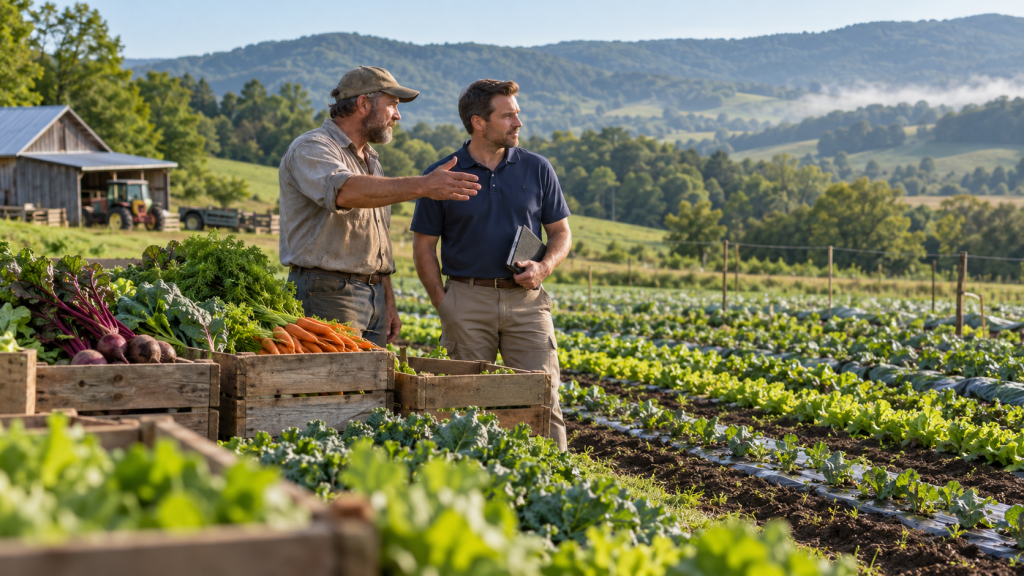
I recently came across a sales post about thinking like a farmer. Having grown up on a dairy farm in Southwest Virginia and now working in foodservice distribution, the comparison stuck with me.
There’s a lot of work that goes into growing something before you ever see a return. Sales can feel the same way. You make visits, learn about an operation, put pricing together, bring samples and follow up. Sometimes that leads to an order quickly. Sometimes you’re still having conversations months later.
That waiting can be frustrating, especially when you’re responsible for growing a territory. You want to know that your time is leading somewhere. But the restaurant owner across from you has their own priorities, and switching distributors may be well down the list.
Having spent years in restaurant management, I understand that side of it too. A salesperson might walk in ready to discuss pricing while the operator is trying to cover a callout, fix a cooler or get through lunch service. The opportunity might be there, but the timing matters.
Give the Relationship Something to Grow On
Patience helps, but you still need to give an operator a reason to keep talking with you.
If someone tells me they’re having trouble with a particular item, that gives me something useful to work on. I can check the specification, look for an alternative or bring a sample for the kitchen to test. If prep time is the issue, a product that saves labor might be more useful than a small difference in case price.
Those conversations start with paying attention. What matters most on their menu? What do they like about their current distributor? What would they change if they could?
An operator who is happy with their supplier may still have a gap you can help fill. That could be one product, an additional delivery option or something they’re currently driving to pick up themselves. A relationship can start there.
You don’t always need to win the whole order on the first visit.
Patience Still Needs a Next Step
One part of this analogy I’d be careful with is the idea that you should simply wait for things to happen.
There’s a difference between giving someone time and leaving a conversation with no direction. If an operator wants pricing, I need to know which products to quote. If they want a sample, I should find out who will test it and when it makes sense to follow up.
A clear next step helps both sides. It gives me something to follow through on, and it gives the customer a chance to evaluate whether what I’m offering will actually work for them.
It also helps me recognize when an opportunity isn’t moving. Sometimes the timing is wrong. Sometimes the delivery schedule, product selection or order requirements don’t fit the operation. Understanding that lets me use my time better and be honest about what I can provide.
The First Order Is Just the Start
Opening an account feels good. But after years on the restaurant side, I know how much the first delivery matters.
Did the right products arrive? Did they meet the kitchen’s expectations? Does the person placing the next order understand the ordering system?
A new account is still learning what it’s like to work with you. The attention you give those early details can make a big difference in whether they feel comfortable buying more.
That same attention matters with established customers. It’s easy to get focused on the next prospect, but the accounts already ordering from you need care too. Their menus change, their volume changes and new problems come up. There’s often room to grow simply by staying involved and understanding what they need next.
Some weeks, all that work shows up in the numbers. Other weeks, it feels like you’ve been busy without moving much forward. I’m still learning to handle that part of sales.
The farming comparison is a reminder I can use on those slower days. You have to do the work, pay attention to what’s happening and make adjustments along the way. You also have to allow enough time for that work to produce something.
I grew up around people who had to get up and take care of things whether it was a good day or a difficult one. That’s a habit worth carrying into this business.


Leave a comment