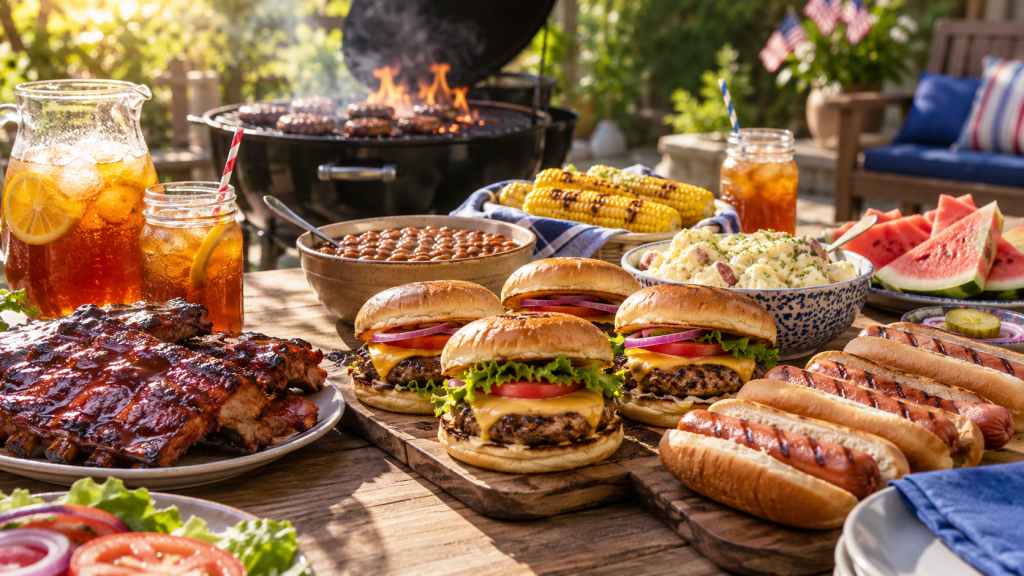
For a lot of Americans, Labor Day feels like the unofficial end of summer.
It is one last long weekend for backyard cookouts, days on the water, family gatherings, and restaurant patios before the calendar starts turning toward football season, fall festivals, and cooler-weather menus.
And like most holidays, food sits right in the middle of it.
When we think about Labor Day cuisine, the first things that probably come to mind are hamburgers, hot dogs, barbecue, corn on the cob, baked beans, potato salad, watermelon, and something cold to drink. It is not necessarily the most complicated menu of the year, but it may be one of the most familiar.
Spend enough time working in restaurants and food distribution, though, and you stop seeing Labor Day as just another cookout. You start seeing the volume, preparation, labor, purchasing, weather, and logistics behind every plate.
A Holiday Built Around American Workers
Labor Day was first celebrated in New York City in 1882 and became a federal holiday in 1894. The purpose was to recognize the contributions and achievements of American workers.
Over time, the holiday also became closely connected with recreation and food. Parades and public gatherings were joined by picnics, barbecues, beach trips, and backyard parties.
That makes sense. A holiday honoring workers naturally became a day when many people tried to step away from work, spend time with family and friends, and share a meal.
Of course, plenty of people still work on Labor Day—including restaurant employees, truck drivers, warehouse teams, grocery workers, farmers, processors, and everyone else needed to keep those celebrations supplied.
Why Grilling Defines the Holiday
Labor Day arrives at the perfect time for outdoor cooking.
The weather is still warm in most of the country, grills have already been working all summer, and the menu can feed a crowd without being overly formal. Burgers and hot dogs are easy to portion, easy to customize, and familiar to almost everyone.
Chicken, ribs, sausages, steaks, and seafood give people a chance to build a more substantial spread, while sides like coleslaw, macaroni salad, pasta salad, baked beans, and corn can usually be prepared in larger batches.
From a food-cost standpoint, the cookout also offers flexibility.
A host can build an affordable menu around hot dogs, chicken, and seasonal produce, or move toward premium steaks, seafood, and specialty sausages. The format stays essentially the same, but the cost per person can change dramatically depending on the proteins, portions, and sides.
That same flexibility is valuable to restaurants. A Labor Day special might be a simple burger-and-beer promotion, a barbecue platter, a seafood boil, smoked ribs, or a family-style package designed for takeout.
The Menu Changes Depending on Where You Are
There is no single Labor Day menu across the country.
In parts of the South, pulled pork, ribs, smoked chicken, collard greens, baked beans, and banana pudding may be part of the table. Along the coast, the holiday might mean shrimp, crab, grouper, lobster rolls, or a low-country boil. In other regions, bratwurst, grilled corn, steaks, sausages, and different styles of barbecue take center stage.
That regional variety is one of the best parts of American food culture. The basic idea of the holiday cookout stays consistent, but the flavors reflect local products, traditions, and preferences.
Even the sides tell a story. Potato salad can be mustard-based, mayonnaise-based, warm, cold, sweet, tangy, or loaded with bacon. Barbecue sauce may be tomato-based, vinegar-based, mustard-based, sweet, smoky, or spicy.
There is a lot of culinary identity hiding in what looks like a simple paper plate.
The Business Behind the Labor Day Plate
For restaurants and food distributors, holiday weekends require planning well before the first grill is lit.
Operators have to estimate customer traffic without knowing exactly what the weather will do. A sunny holiday weekend can pack patios, waterfront restaurants, and beach bars. Heavy rain can move the crowd indoors, shift business toward takeout, or reduce traffic altogether.
Order too little and a restaurant may run out of its featured items during one of the busiest stretches of the weekend. Order too much and it could be left with perishable inventory after the holiday crowd disappears.
Distributors face the same balancing act on a larger scale.
Demand increases for ground beef, hot dogs, chicken, ribs, buns, condiments, disposable products, charcoal, produce, beer, and beverages. At the same time, holiday schedules can affect order cutoffs, warehouse staffing, inbound freight, and delivery routes.
That package of hamburger buns sitting beside the grill represents more than it appears to. Wheat had to be grown and milled. The buns had to be produced, packaged, transported, stored, selected in a warehouse, loaded onto a truck, and delivered before they ever reached a restaurant or grocery store.
Multiply that by every item on the table, and a backyard cookout starts to look like a small lesson in the American food supply chain.
Simplicity Still Requires Execution
Cookout food looks easy, but feeding a crowd safely and consistently still takes some skill.
Cold salads, cut fruit, meat, and other perishable foods cannot sit in the heat all afternoon. Raw proteins need to be kept separate from ready-to-eat foods, and color alone is not a reliable way to determine whether meat is safely cooked.
The USDA recommends cooking ground meats to 160°F, poultry to 165°F, and whole cuts of beef, pork, lamb, and veal to 145°F followed by at least a three-minute rest. Cold foods should stay at or below 40°F, while hot foods should be held at or above 140°F.
Those rules matter at home, but they become even more important in a restaurant serving hundreds of guests during a busy holiday weekend.
More Than the End of Summer
Labor Day cuisine is not built around one historic dish. It is built around gathering.
It is burgers coming off a backyard grill, barbecue smoking behind a neighborhood restaurant, seafood served beside the water, and cold watermelon passed around on a hot afternoon.
But it is also the work behind all of it.
It is the farmer, processor, baker, warehouse selector, driver, cook, server, dishwasher, manager, and countless others who help move food from its source to the plate.
That feels especially appropriate for Labor Day.
So while the holiday may mark the unofficial end of summer, the food served over Labor Day weekend also gives us a chance to recognize the people whose work makes those meals possible.
And that may be the best story behind the plate.


Leave a comment