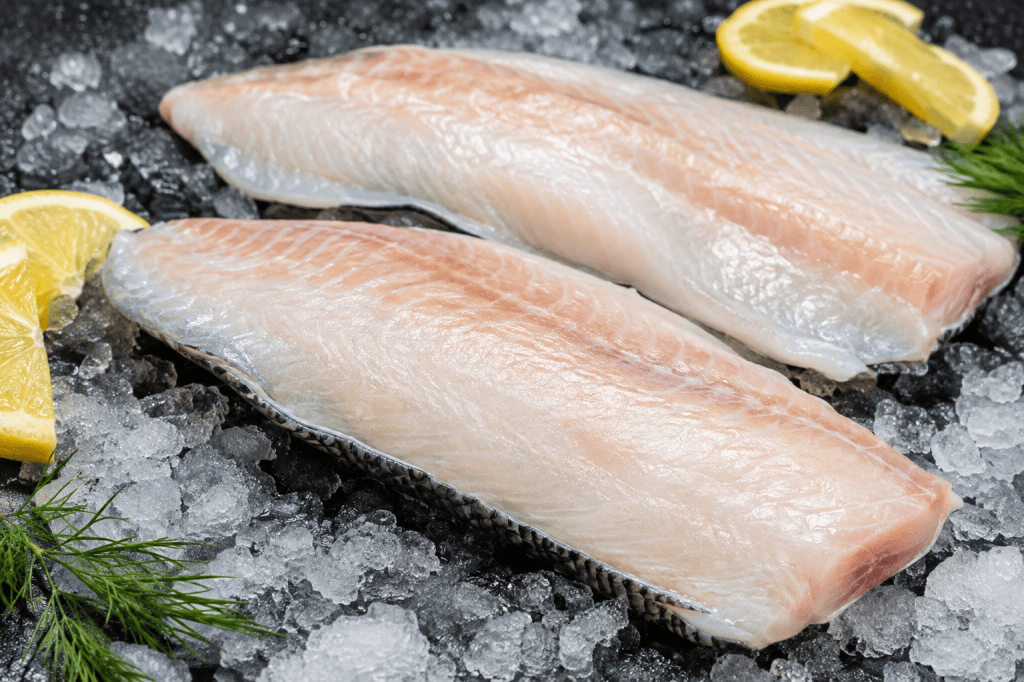
There are certain fish that almost everyone recognizes when they see them on a restaurant menu.
Salmon. Cod. Grouper. Mahi. Snapper.
Then there are species that make people stop for a second and ask, “What exactly is that?”
Barramundi is one of those fish.
But while barramundi may not have the same name recognition in the United States as salmon or mahi-mahi, it has become an increasingly interesting fish for chefs, seafood suppliers, and foodservice distributors.
And there is a lot more to this fish than its unusual name.
What Is Barramundi?
Barramundi is a large predatory fish native to the Indo-Pacific region, particularly Australia and Southeast Asia.
Its scientific name is Lates calcarifer, although it is also commonly known as Asian sea bass.
One of the most interesting things about barramundi is that it can live in both freshwater and saltwater environments.
Barramundi are considered euryhaline fish, meaning they can tolerate a wide range of salinity levels. During their natural life cycle, they may move between rivers, estuaries, coastal waters, and other environments.
That adaptability has also helped make barramundi a strong candidate for aquaculture.
Today, much of the barramundi entering the foodservice market is farm-raised.
What Does Barramundi Taste Like?
From a chef’s perspective, barramundi has one major advantage:
It is extremely approachable.
Barramundi has a mild, clean flavor without the strong “fishy” taste that can turn some customers away from seafood.
The flesh is white with a firm but tender texture, and it has enough natural richness to stand up to a variety of cooking methods.
Think of it as a fish that can fit into a lot of different menu concepts.
That matters in foodservice.
Restaurants don’t necessarily want an ingredient that can only be used for one dish. The more applications a product has, the easier it becomes to justify putting it in inventory.
Barramundi can work grilled, baked, pan-seared, broiled, fried, or even incorporated into tacos and sandwiches.
Why Chefs Should Pay Attention
One of the biggest challenges with seafood is balancing four things:
Flavor, consistency, availability, and price.
Customers may love grouper or snapper, but depending on the market, season, location, and supply situation, those species can become expensive or difficult to source consistently.
That’s where alternative species become interesting.
Barramundi gives chefs another option.
It can be used as a center-of-the-plate entrée with vegetables and rice, turned into a fish sandwich, served over pasta, used in tacos, paired with sauces, or featured as a weekly special.
Its mild flavor also means the fish doesn’t overpower the rest of the plate.
Want to go Mediterranean?
Barramundi works.
Asian-inspired?
Absolutely.
Blackened with Cajun seasoning?
No problem.
Simple grilled fish with lemon, butter, and herbs?
That’s probably where it shines the most.
For a chef, versatility means opportunity.
The Aquaculture Story
Barramundi also represents something much bigger happening in the seafood industry.
Aquaculture continues to play an increasingly important role in the global seafood supply chain.
Wild fisheries are obviously still extremely important, but the world’s appetite for seafood is enormous. Supplying restaurants, grocery stores, hotels, hospitals, and consumers requires a combination of wild-caught and farm-raised production.
Barramundi is particularly well suited for aquaculture because of its growth characteristics and ability to adapt to different water conditions.
Depending on the producer and country of origin, barramundi may be raised in freshwater ponds, coastal systems, ocean pens, or land-based recirculating aquaculture systems.
That doesn’t mean every barramundi product is identical.
Just like beef, chicken, shrimp, salmon, or virtually any other food product, the producer, farming practices, processing methods, country of origin, and supply chain all matter.
For chefs and operators, asking where the fish comes from is just as important as asking what species it is.
Barramundi and the Foodservice Supply Chain
This is where barramundi becomes especially interesting to me.
Most restaurant guests probably never think about what happens before a fish lands on their plate.
There may be a farm or fishery thousands of miles away.
Then processing.
Freezing or chilling.
Packaging.
International transportation.
Importers.
Seafood processors.
Distribution centers.
Foodservice distributors.
Delivery trucks.
And finally, the restaurant kitchen.
By the time a chef puts a piece of barramundi on the grill, an entire supply chain has already been working behind the scenes.
That’s true for most food, but seafood makes the complexity particularly easy to see.
Maintaining temperature, quality, traceability, inventory, and availability across that chain isn’t simple.
When it works correctly, the guest never notices any of it.
They just get a good piece of fish.
Could Barramundi Become More Common on American Menus?
I think it has an opportunity.
One of the biggest barriers is simply name recognition.
A customer knows what salmon is.
They probably know mahi-mahi.
Put “barramundi” on the menu and there is a decent chance someone at the table is going to Google it.
But unfamiliarity isn’t always a bad thing.
Restaurants constantly introduce customers to new ingredients, cuts, species, sauces, and cuisines. Sometimes the unfamiliarity itself becomes part of the selling point.
A server who can explain:
“It’s a mild white fish similar in application to other popular whitefish, with a clean flavor and firm texture.”
has already eliminated much of the uncertainty.
From there, the preparation sells the dish.
The Bigger Picture
Barramundi is a good example of why I enjoy learning about food distribution.
Something as simple as a fish fillet opens the door to conversations about aquaculture, global trade, restaurant menu development, sustainability, cold-chain logistics, commodity pricing, and consumer preferences.
Most people sitting in a restaurant aren’t thinking about any of that.
And they shouldn’t have to.
But behind that plate is an enormous industry making sure the product gets where it needs to go.
Barramundi might still be unfamiliar to many American consumers, but for chefs looking for a versatile white fish—and distributors looking for additional seafood options—it is certainly a species worth knowing.
Sometimes the next great menu item isn’t something new.
It’s something that’s been swimming around for a long time that we simply haven’t been paying enough attention to.


Leave a Reply