When most people think about buying food, they think about grocery stores. Publix, Walmart, Costco
Restaurants think differently though.
A restaurant can’t simply drive down to the supermarket every morning to buy enough food to serve hundreds of customers. At least most of them can’t. They need thousands of pounds of fresh, frozen, and dry goods delivered consistently, safely, and on time.
That’s where foodservice distribution comes in.
It’s one of the largest industries that most people never think about, yet it helps feed millions of Americans every single day.
What Is Foodservice Distribution?
At its core, foodservice distribution is the business of connecting food manufacturers and farms with professional kitchens.
Distributors purchase products from thousands of suppliers, store those products in massive distribution centers, and deliver them to restaurants, schools, hospitals, hotels, convenience stores, sports venues, nursing homes, and countless other foodservice operators.
Instead of a restaurant managing relationships with hundreds of different manufacturers, they can often order everything they need from a single distributor.
That saves an enormous amount of time and simplifies operations.
What Does a Distributor Actually Sell?
Many people assume food distributors only sell food.
In reality, they sell almost everything a commercial kitchen needs.
A typical order might include:
- Fresh beef, chicken, seafood, and produce
- Frozen foods
- Dairy products
- Bread and bakery items
- Dry groceries and canned goods
- Cooking oils and spices
- Paper products
- Cleaning chemicals
- Disposable takeout containers
- Kitchen supplies
If it helps a restaurant operate, there’s a good chance a distributor carries it.
More Than Just Trucks
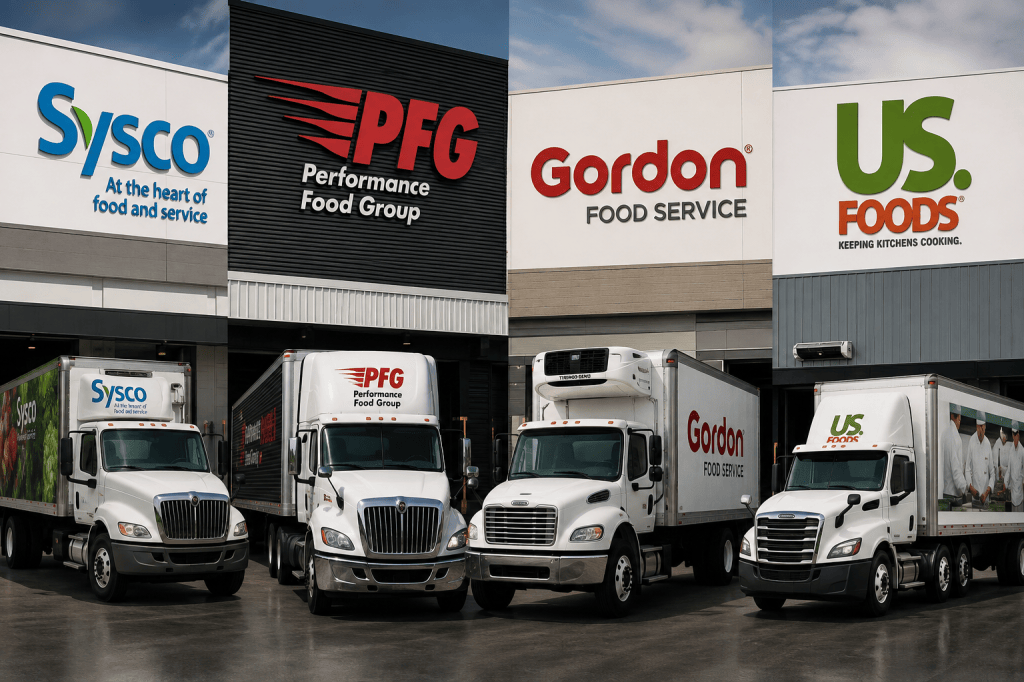
When people see a Sysco, US Foods, Performance Food Group (PFG), or Gordon Food Service (GFS) truck driving down the highway, it’s easy to think they’re simply delivering food.
What you don’t see is everything happening behind the scenes.
Buyers negotiating with suppliers.
Category managers monitoring commodity markets.
Warehouse employees picking thousands of cases overnight.
Transportation planners building efficient delivery routes.
Inventory managers trying to balance supply with demand.
Food safety teams ensuring products remain compliant.
Sales reps helping customers reduce costs and solve operational problems.
There are thousands of moving parts working together every day.
Why Restaurants Depend on Distributors
Having worked in restaurant management before moving into food distribution, I can appreciate both sides.
When I managed restaurants, I knew the truck would show up every week. I saw my rep every few weeks and would think “that’s a nice job to have.”
But I didn’t spend much time thinking about everything required to make that happen.
Now I see it every day.
A distributor isn’t simply delivering products.
They’re helping restaurants manage inventory, monitor food costs, introduce new products, solve shortages, navigate recalls, and keep kitchens running.
The best distributor reps become business partners rather than just vendors.
The Scale Is Incredible
The average distribution center can stock tens of thousands of different products.
Some facilities are larger than multiple football fields combined.
Millions of pounds of food move through these warehouses every week.
Many operate around the clock.
Orders are often picked overnight so trucks can leave before sunrise and restaurants receive deliveries before lunch service begins.
When everything works well, nobody notices.
When it doesn’t, everyone notices.
It’s a Business of Logistics
Foodservice distribution isn’t really about food.
It’s about logistics.
Every product has different storage requirements.
Fresh produce has a limited shelf life.
Frozen products have to remain frozen.
Seafood may arrive from another continent.
Meat prices can fluctuate dramatically.
A late truck, equipment failure, weather event, or transportation delay can ripple throughout the entire supply chain.
The goal is making an incredibly complicated system feel simple to the customer.
Why I Find It So Interesting
One of the reasons I enjoy working in this industry is because no two days are ever the same.
One morning I might be discussing beef markets with a steakhouse.
Later that afternoon I’m helping a coffee shop find a better paper cup or working with a new restaurant opening its doors for the first time.
Every restaurant is different.
Every kitchen has different challenges.
Every menu tells a different story.
Foodservice distribution sits right in the middle of all of it.
Final Thoughts
Most people never think about the businesses responsible for keeping restaurant kitchens stocked.
That’s understandable.
If the food arrives on time, nobody notices the supply chain behind it.
But without foodservice distributors, restaurants would spend far more time sourcing products, managing vendors, and solving logistics problems than serving guests.
The next time you sit down at your favorite restaurant, remember that there’s an entire network of farmers, manufacturers, processors, warehouses, truck drivers, buyers, and foodservice distributors working behind the scenes.
They’re part of the reason your meal was there waiting for you.


Leave a Reply