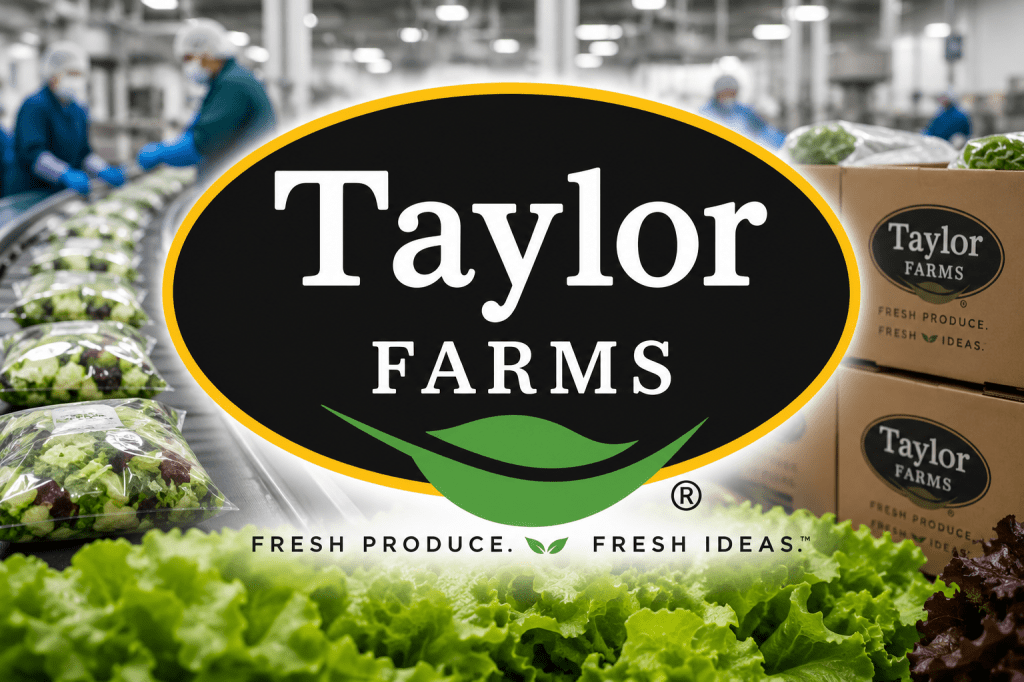
Walk into almost any restaurant kitchen, hospital cafeteria, school, grocery store, or convenience store, and there’s a good chance you’re looking at products from Taylor Farms—even if you don’t realize it.
And while consumers often recognize brands like Coca-Cola, Tyson, or Heinz, Taylor Farms operates largely behind the scenes. Yet it has become one of the largest fresh produce processors in North America and plays an essential role in keeping restaurants supplied with ready-to-use fruits and vegetables.
Humble Beginnings
Taylor Farms was founded in 1995 by Bruce Taylor in Salinas, California, often referred to as the “Salad Bowl of the World.”
Bruce Taylor came from a family deeply involved in produce farming and recognized a growing opportunity in value-added produce—fresh vegetables that have already been washed, cut, mixed, and packaged.
So instead of selling only raw lettuce by the case, Taylor Farms focused on saving customers labor while improving consistency.
That strategy proved incredibly successful.
Today, the company operates dozens of processing facilities throughout North America and supplies customers across foodservice, retail, and industrial markets.
More Than Just Salad
Many people associate Taylor Farms with bagged salads, but like many food manufacturers, the company’s product portfolio extends far beyond lettuce.
Its offerings include:
- Leafy greens
- Salad kits
- Chopped vegetables
- Fresh-cut fruit
- Vegetable blends
- Onions
- Tomatoes
- Bell peppers
- Cabbage
- Broccoli
- Cauliflower
- Meal kits
- Grab-and-go products
- Custom produce solutions for restaurants
For many restaurants, the days of paying a prep cook and having additional liability are over. Purchasing pre-cut produce isn’t simply about convenience—it’s about running a more efficient operation.
The Company Behind Many Private Labels
One thing many people don’t realize is that Taylor Farms doesn’t just sell products under its own name.
The company also produces fresh-cut produce and salad products for numerous grocery stores, foodservice distributors, and private-label brands. Depending on the customer, the same processing facility may package products under multiple different labels.
For foodservice distributors, this means restaurants may be purchasing Taylor Farms products without ever seeing the Taylor Farms name on the case. Many distributor-exclusive brands source products from large manufacturers like Taylor Farms, allowing distributors to offer their own branded product lines while relying on the expertise and production capacity of established processors.
This practice is common throughout the food industry. Whether it’s produce, dairy, canned goods, or frozen foods, many private-label products are manufactured by companies that also produce nationally recognized brands.
A Reminder of How Connected the Food Supply Chain Is
The importance of companies like Taylor Farms became especially apparent during the recent Cyclospora outbreak linked to fresh produce. Because Taylor Farms supplies products to a wide variety of foodservice operators, retailers, and private-label programs, the impact extended far beyond a single brand.
When a food safety issue occurs at a major processor, recalls can affect numerous product labels simultaneously because they often originate from the same manufacturing facilities. Restaurants, distributors, and retailers must quickly identify affected products, remove them from inventory, and notify customers. Trust me, it’s a real stressful process.
While food recalls understandably receive significant public attention, at the same time – they also demonstrate how seriously the industry takes food safety. Modern traceability systems allow manufacturers, distributors, and regulatory agencies to rapidly identify affected lots and remove products from the supply chain before additional consumers are exposed. It’s almost entirely automated start to finish.
The recent Cyclospora outbreak serves as a reminder that food safety is a shared responsibility involving growers, processors, manufacturers, distributors, regulators, and restaurant operators. Every link in the supply chain plays a role in protecting consumers.
Why Restaurants Buy Fresh-Cut Produce
Restaurant operators constantly balance food quality, labor costs, and consistency.
Preparing vegetables from scratch requires employees to wash, peel, chop, and portion products every day.
By purchasing processed fresh produce, operators can:
- Reduce kitchen labor
- Improve portion consistency
- Reduce food waste
- Increase food safety through standardized processing
- Speed up ticket times during busy service
- Simplify inventory management
For many restaurants, the saving on labor alone can justify the additional cost over purchasing whole produce.
Foodservice Distribution Makes It Possible
Companies like Taylor Farms are a perfect example of how specialized today’s food supply chain has become.
Taylor Farms focuses on growing, processing, packaging, and maintaining the cold chain for fresh produce.
Foodservice distributors then deliver those products alongside thousands of other items restaurants need—from proteins and dairy products to paper goods and cleaning supplies.
Instead of coordinating deliveries from dozens of individual manufacturers, restaurants have the option to purchase nearly everything they need from a single distributor. Now is that what they really do? That’s debatable…
That partnership between manufacturers and distributors is one of the reasons modern foodservice operates as efficiently as it does.
Innovation in Fresh Produce
Taylor Farms has invested heavily in automation, food safety, packaging technology, and refrigerated logistics.
Fresh produce is one of the most challenging food categories to manage. Mainly because it has a relatively short shelf life and requires strict temperature control throughout the supply chain.
Maintaining freshness from the farm to the restaurant requires careful coordination between growers, processing facilities, distribution centers, transportation companies, and foodservice distributors.
When executed well, restaurants receive products that are ready to use almost immediately after delivery.
Challenges Facing the Industry
Like every company involved in agriculture and food manufacturing, Taylor Farms faces ongoing challenges, including:
- Rising labor costs
- Water availability
- Transportation expenses
- Food safety regulations
- Weather-related crop disruptions
- Commodity price volatility
Despite these challenges, demand for value-added produce continues to grow as restaurants look for ways to reduce their labor costs while maintaining quality and consistency.
The Business Behind the Produce
Taylor Farms is one of those companies most consumers rarely think about, unless your in the Walmart salad section, yet millions of meals depend on its products every single day.
From quick-service restaurants and hospitals to universities and independent operators, its fresh produce helps kitchens save time, reduce waste, and serve consistent meals.
It’s another reminder that the food industry is supported by an enormous network of companies working behind the scenes. While restaurants receive much of the attention, manufacturers like Taylor Farms—and the distributors that deliver their products—are essential links in the supply chain that keeps America’s kitchens running.


Leave a Reply