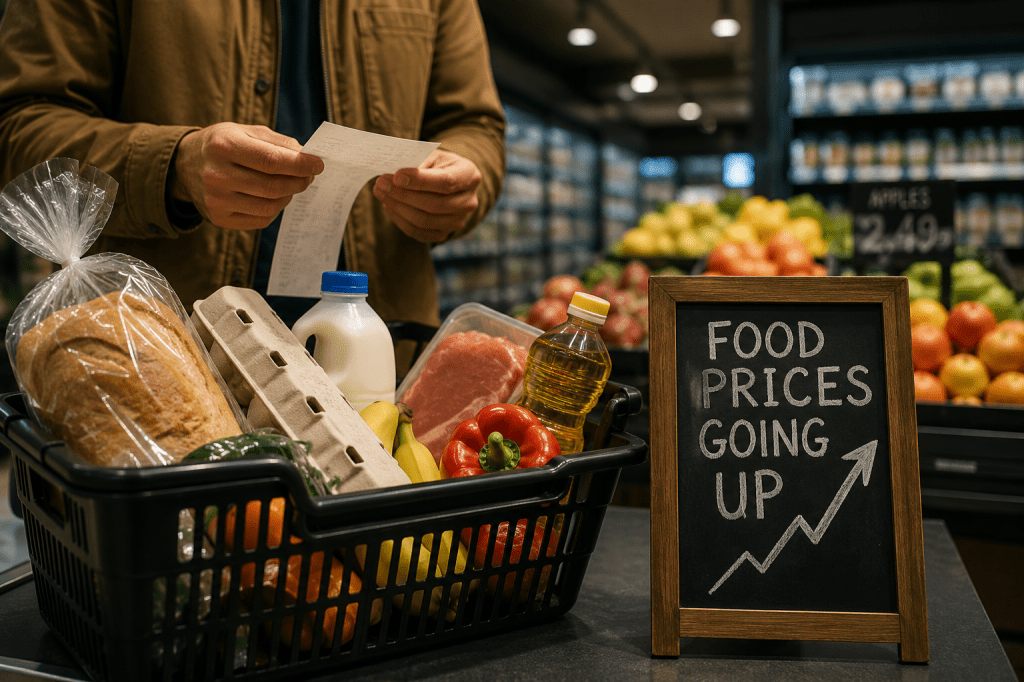
If you’ve been grocery shopping lately or eating at your favorite restaurant, you’ve probably noticed something frustrating:
Food costs more than it did just a few years ago.
Consumers often blame restaurants for raising menu prices, while restaurant owners blame distributors, and distributors point toward manufacturers or suppliers.
The reality is far more complicated.
Food prices are influenced by dozens of factors, many of which are completely outside the control of restaurants or distributors.
Here’s a look at what actually drives food prices.
It Starts on the Farm
Every food product begins with agriculture.
Farmers face many of the same rising costs as everyone else, including:
- Fuel
- Fertilizer
- Animal feed
- Seeds
- Farm equipment
- Labor
- Property taxes
- Insurance
When producing food becomes more expensive, those costs eventually work their way through the supply chain.
For livestock producers, feed often represents one of the largest expenses. Corn and soybean meal prices can significantly influence the cost of raising cattle, hogs, and poultry.
Weather Can Change Everything
Agriculture depends heavily on weather.
Droughts can reduce crop yields.
Flooding can destroy fields.
Hurricanes can damage citrus groves or vegetable farms.
Extreme heat stresses livestock and lowers production.
Even fisheries can be affected by water temperatures and storms.
One poor growing season can reduce supply enough to increase prices nationwide.
Supply and Demand Still Rule
Like nearly every other product, food prices are largely determined by supply and demand.
If demand increases while supply stays the same, prices generally rise.
If supply falls while demand remains strong, prices often rise even faster.
This happens regularly with commodities such as:
- Beef
- Chicken
- Pork
- Eggs
- Dairy
- Wheat
- Coffee
- Cocoa
Sometimes a disease outbreak, poor harvest, or international event can quickly reduce supply and send prices climbing.
Transportation Isn’t Free
Food has to move!
Fresh produce may travel thousands of miles.
Seafood often crosses oceans.
Beef may be processed in one state before being shipped across the country.
Every step requires:
- Truck drivers
- Refrigerated trailers
- Fuel
- Warehouses
- Distribution centers
When diesel prices increase or transportation capacity tightens, freight costs increase as well.
Those higher logistics costs eventually become part of the final food price.
Labor Costs Continue to Rise
Food production is labor intensive.
Workers are needed to:
- Harvest crops
- Process meat
- Manufacture products
- Drive trucks
- Stock warehouses
- Deliver food
- Prepare meals
As wages increase throughout the economy, businesses often need to adjust prices to cover higher payroll expenses.
Labor shortages can also reduce production capacity, putting additional pressure on prices.
Packaging Costs Matter Too
Consumers rarely think about packaging, but it represents a significant cost.
Food manufacturers purchase:
- Cardboard
- Plastic
- Aluminum
- Glass
- Labels
- Pallets
If packaging materials become more expensive, manufacturers typically pass some of those costs along.
Even something as simple as a cardboard case or plastic container can affect the final price.
Global Markets Affect Local Prices
The food industry operates on a global scale.
Coffee may come from Brazil.
Seafood from Asia.
Olive oil from Europe.
Spices from India.
Chocolate depends heavily on cocoa grown in West Africa.
Trade policies, tariffs, currency fluctuations, political instability, and international conflicts can all affect prices—even if you’re buying food at a local restaurant in the United States.
Distribution Adds Value
Food distributors often receive criticism whenever prices increase.
In reality, distributors generally operate on relatively thin margins while providing enormous value to the foodservice industry.
Distributors purchase inventory, warehouse thousands of products, maintain refrigerated fleets, manage logistics, and deliver hundreds of items in a single stop.
Without distribution, restaurants would need to buy directly from dozens of different manufacturers and suppliers.
Distribution doesn’t usually create higher prices—it helps restaurants obtain products more efficiently.
Restaurants Often Absorb More Than Customers Realize
Many restaurant operators delay raising menu prices as long as possible.
Instead, they often try to offset rising food costs by:
- Improving portion control
- Reducing waste
- Negotiating with suppliers
- Adjusting menus
- Finding alternative products
- Improving labor efficiency
Only after exhausting those options do many restaurants increase menu prices.
The goal is to remain profitable without driving customers away.
The Bottom Line
Food prices don’t increase because of one company or one decision.
They reflect the combined impact of agriculture, weather, commodity markets, transportation, labor, packaging, manufacturing, global trade, and supply chain logistics.
By the time a steak, loaf of bread, or carton of eggs reaches a restaurant or grocery store, it has passed through dozens of businesses, each facing its own operating costs.
The next time you notice higher prices at the grocery store or your favorite restaurant, remember that what you’re seeing is often the result of an incredibly complex supply chain adapting to changing economic conditions.
Understanding that journey helps explain why food prices can rise—and why the businesses behind the plate work every day to keep food moving despite those challenges.


Leave a Reply