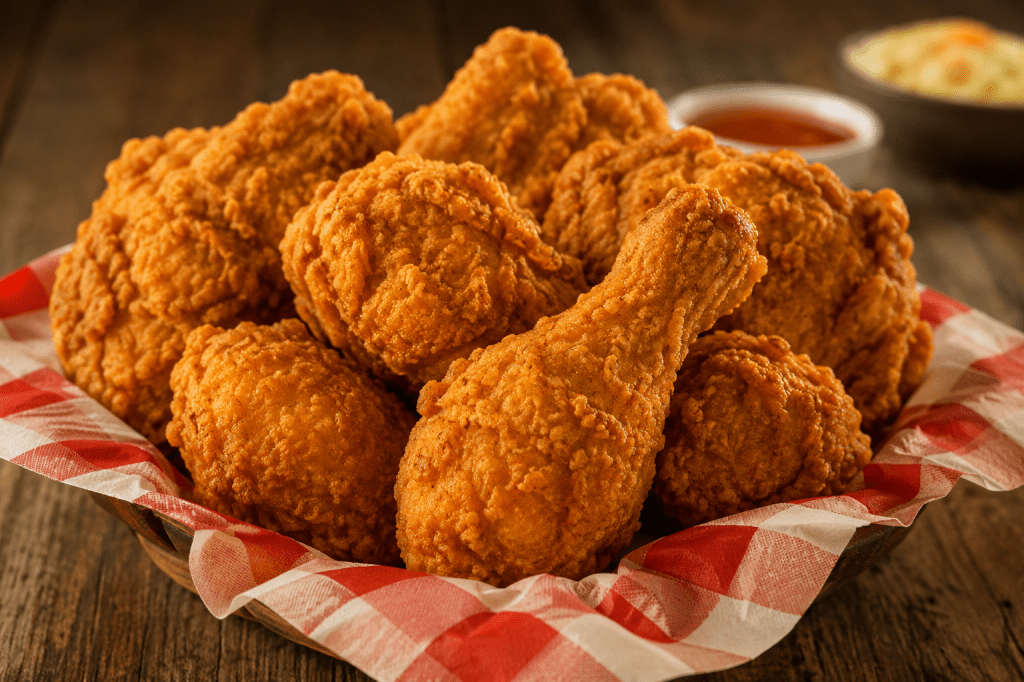
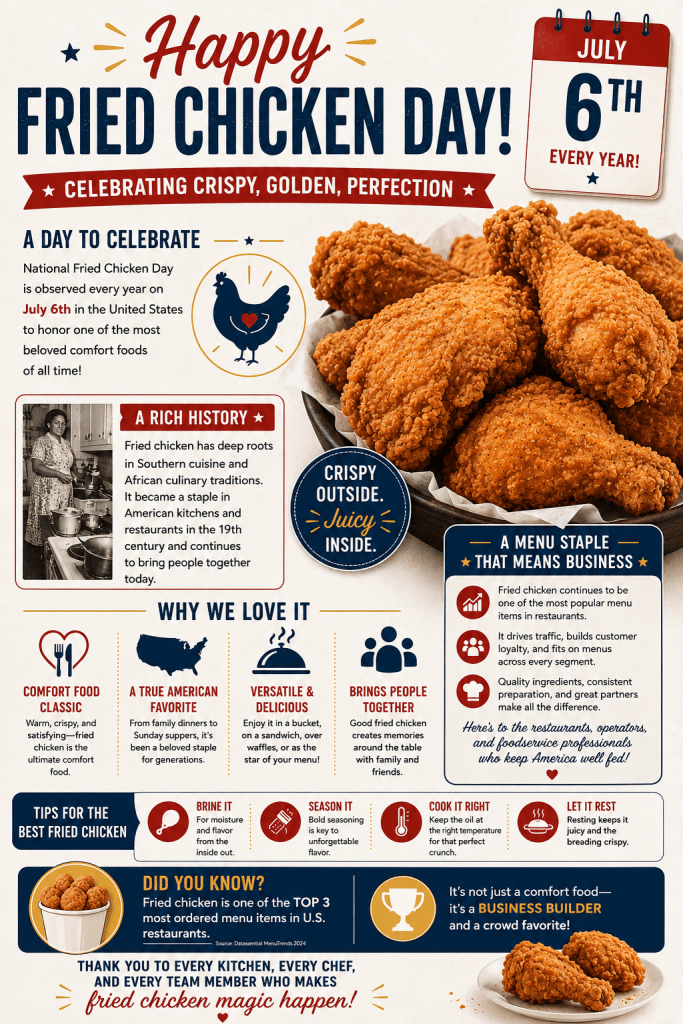
Every year on July 6, Americans celebrate National Fried Chicken Day. For most people, it’s simply another excuse to order a bucket of chicken, a crispy sandwich, or a basket of tenders.
But behind every piece of fried chicken is one of the largest and most sophisticated supply chains in the food industry.
Fried chicken isn’t just a comfort food—it’s an industry powerhouse.
A Brief History
Although frying chicken has culinary roots in both Scottish cooking traditions and the seasoning techniques brought by enslaved West Africans, the dish evolved into what we now recognize as Southern fried chicken in the American South during the 18th and 19th centuries.
As the United States grew, so did fried chicken’s popularity. It expanded far beyond the South, becoming a staple in diners, family restaurants, grocery stores, convenience stores, and quick-service chains across the country.
Today, chicken is the most consumed meat in the United States, making fried chicken one of the most recognizable and widely enjoyed comfort foods in America.
Why Fried Chicken Works
Restaurant operators appreciate fried chicken for many of the same reasons customers do.
It appeals to nearly every demographic, works equally well for dine-in, takeout, and delivery, and can be adapted into countless menu items, including:
- Bone-in fried chicken
- Chicken tenders
- Wings
- Fried chicken sandwiches
- Chicken and waffles
- Salads
- Wraps
- Family meal bundles
Few proteins offer the same level of versatility while maintaining such strong consumer demand.
The Business Behind Every Basket
Before a basket of fried chicken reaches a customer’s table, it has typically passed through a supply chain that looks something like this:
- Poultry farmers raising flocks
- Hatcheries and feed suppliers
- Processing facilities
- Manufacturers producing breading, seasonings, marinades, cooking oils, and sauces
- Packaging manufacturers
- Refrigerated transportation companies
- Foodservice distributors
- Restaurant operators and kitchen teams
Thousands of people work together every day to ensure restaurants receive safe, consistent, high-quality products.
Foodservice distributors play a critical role in this process. Rather than ordering chicken from one supplier, breading from another, cooking oil from a third, and packaging from several more, restaurants can source hundreds of products through a single distribution partner. That saves operators valuable time, reduces administrative work, and helps keep kitchens running efficiently.
It’s a reminder that great restaurants don’t operate alone—they rely on an entire network of businesses working behind the scenes.
More Than Just Chicken
Successful fried chicken programs are built around much more than the protein itself.
Operators constantly manage:
- Oil quality and filtration
- Food cost
- Portion consistency
- Holding times
- Labor efficiency
- Equipment maintenance
- Packaging for takeout and delivery
Then there are the items that complete the meal. Fries, coleslaw, biscuits, macaroni and cheese, mashed potatoes, beverages, and desserts all contribute to higher average ticket values and improved profitability.
When executed well, fried chicken can become one of the strongest profit drivers on a menu.
A Continuing Evolution
Consumer preferences continue to shape the category.
Today’s restaurants continue experimenting with:
- Nashville hot chicken
- Korean-inspired fried chicken
- Honey butter flavors
- Spicy chicken sandwiches
- Gluten-free breading options
- Premium dipping sauces
- Limited-time flavor promotions
While the flavors continue to evolve, the core appeal remains unchanged: crispy, flavorful, satisfying comfort food.
Why It Matters
National Fried Chicken Day isn’t simply about celebrating one of America’s favorite foods.
It’s an opportunity to recognize the farmers, processors, manufacturers, distributors, truck drivers, warehouse teams, chefs, cooks, servers, and restaurant operators who make it possible for millions of people to enjoy fried chicken every day.
At Distributor Dispatch, we believe the most interesting stories in foodservice often happen long before the first order reaches the table.
So while millions of Americans celebrate National Fried Chicken Day with a sandwich, wings, or a bucket of crispy chicken, it’s worth remembering that every order represents the work of thousands of people across agriculture, manufacturing, transportation, distribution, and restaurant operations.
That’s the business behind the plate.
Happy National Fried Chicken Day!
Distributor Dispatch covers the businesses, supply chains, and people that keep food moving from farm to fork. Follow along for more stories exploring the business behind the plate.


Leave a Reply