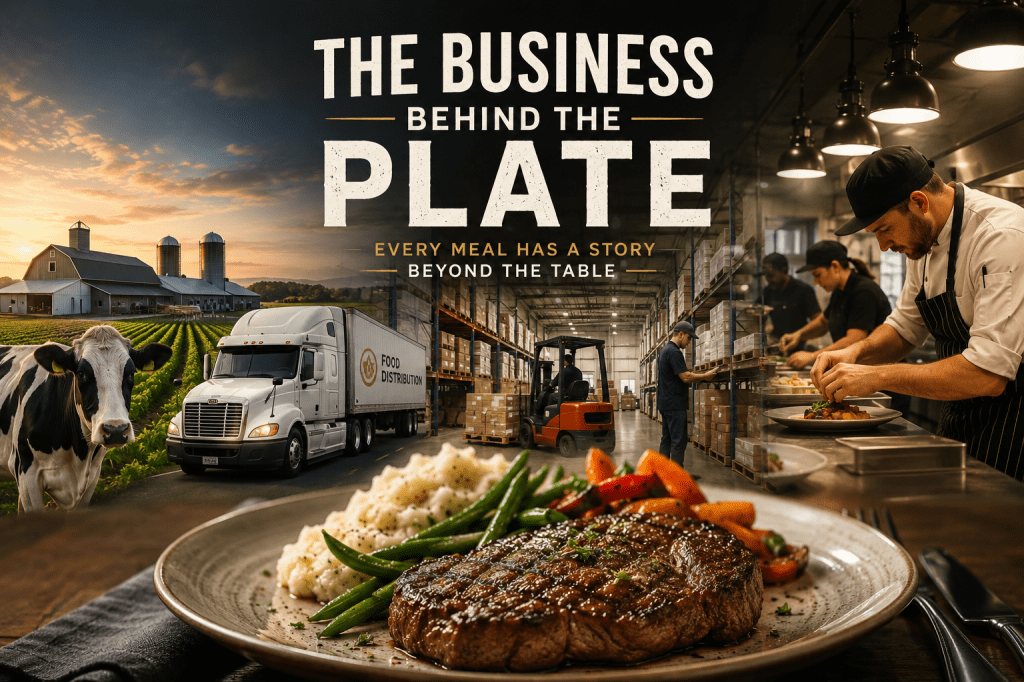
Most people look at a restaurant meal and see the finished product.
A burger.
A steak.
A plate of pasta.
A seafood platter.
What they usually don’t see is all the time, effort, and coordination that made that meal possible.
Having worked on a dairy farm, spent years in restaurant management, and now working in food distribution, I’ve learned that everything on the plate tells a much bigger story than what’s sitting in front of the guest.
The meal itself is often the easiest part.
The real challenge is everything happening behind the scenes that gets the meal on the plate.
Every Plate Starts Long Before the Kitchen
When a guest orders dinner, they rarely think about where the ingredients came from. They just want the food now
The steak may have originated on a cattle farm hundreds of miles away.
The produce may have passed through multiple growers, processors, and warehouses before arriving at the restaurant.
The cooking oil, paper products, cleaning supplies, seasonings, and beverages all came through separate supply chains that somehow have to arrive at the right place at the right time.
None of this happens by accident.
Every item on a menu requires planning, purchasing, forecasting, transportation, storage, and inventory management.
If any link in that chain breaks, restaurants feel it immediately.
Restaurant Managers Wear More Hats Than People Realize
When I worked in restaurant management, I quickly learned that serving food was only part of the job.
Behind every successful shift there’s a combination of the following:
Food orders.
Labor schedules.
Food costs.
Inventory counts.
Vendor relationships.
Equipment issues.
Training staff.
Managing guest complaints.
Trying to forecast sales for the upcoming week.
The guest only sees the dining room but managers see the hundreds of decisions happening every day to keep the operation running.
A restaurant can serve incredible food and still struggle financially if the business side isn’t managed properly.
Distribution Keeps the Wheels Turning
One of the biggest things I’ve learned working in food distribution is just how much distributors simplify the process for operators.
Imagine a restaurant having to order directly from every company they purchase from.
One supplier for beef.
Another for chicken.
Another for seafood.
Several produce companies.
Multiple beverage vendors.
Paper goods suppliers.
Cleaning chemical suppliers.
And to be fair, some operators prefer that model. They like buying direct and maintaining relationships with dozens of individual vendors. You’ll often hear people say, “Don’t give in to the big corporations.”
But for most restaurants, the administrative burden alone would be overwhelming. Managing orders, deliveries, invoices, product issues, and vendor relationships across dozens of suppliers would consume an enormous amount of time and labor.
That’s where having a main distributor creates value. It allows operators to spend less time coordinating deliveries and more time focusing on running their business.
Distributors help consolidate much of that purchasing into one relationship and one delivery network.
The result is less time spent managing vendors and more time focused on running the business.
Most consumers never think about food distribution, but it’s one of the reasons modern foodservice operates as efficiently as it does.
Margins Matter
One thing that surprised me when I first entered restaurant management was how thin margins can be.
A busy dining room doesn’t always mean a profitable restaurant.
Food costs fluctuate.
Labor costs rise.
Utilities increase.
Equipment breaks.
Unexpected expenses happen.
Restaurant operators constantly balance delivering value to guests while maintaining profitability.
That’s why decisions that seem small from the outside can have a significant impact on the business.
Saving a few percentage points on food cost.
Reducing waste.
Improving inventory accuracy.
Negotiating better purchasing agreements.
Over time, those small improvements can make a major difference.
The Plate Is the Final Step
When I look at a restaurant meal today, I don’t just see the food.
I see the farm.
The manufacturer.
The warehouse.
The truck driver.
The distributor.
The chef.
The manager.
The dishwasher.
The server.
The dozens of people and businesses that played a role in getting that meal to the table.
The plate is simply the final step in a process that started long before the guest walked through the door.
Understanding the business behind the plate gives you a new appreciation for the complexity of the food industry and the thousands of people working every day to make it all happen.
The next time you’re sitting down for a meal, take a moment to think about everything that happened before that plate reached your table.
It’s a much bigger operation than most people realize.


Leave a Reply