When most people hear the term “supply chain,” they picture warehouses, trucks, distribution centers, and computer systems.
When I hear the term, I picture farming.
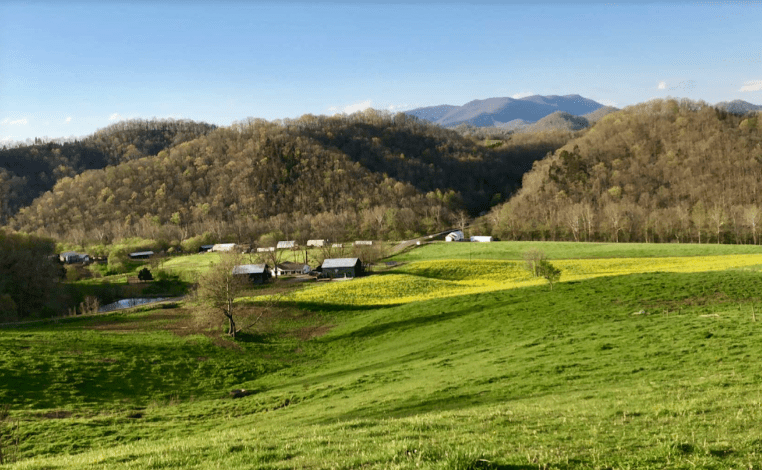
I grew up on a dairy farm in Southwest Virginia. Long before I understood concepts like logistics, inventory management, procurement, or commodity markets, I was learning lessons and getting first hand experience that would eventually help me understand how food moves through the economy.
At the time, I didn’t realize it. To me, it was simply my everyday life.
Growing up on a dairy farm meant waking up at the crack of dawn, heading to the barn, and spending the next several hours milking cows. Then you’d do it all over again that evening. Seven days a week. Three hundred sixty-five days a year. It wasn’t exactly the childhood most people imagine, but it gave me a firsthand appreciation for the amount of work required before a gallon of milk ever reaches a grocery store shelf.
The alarm clock wasn’t optional. Cows don’t care if it’s a holiday, if it’s raining, or if you wanted to sleep in because you partied too hard the night before. They had to be fed, milked, and cared for every single day.
What didn’t sink in as a kid was how many moving parts were required to make that happen.
Feed had to arrive on time and paid for.
Equipment had to work and be maintained.
Veterinarians had to be available when needed.
Fuel had to be delivered.
Replacement parts had to be sourced quickly when something broke.
Milk trucks had to show up on schedule to haul away the milk.
If any one of those pieces failed, the entire operation felt the impact.
Years later, after working in restaurants and eventually moving into food distribution, I realized that the same principle applies across the entire food industry.
Every business is part of a larger chain.
A restaurant depends on its suppliers.
A distributor depends on manufacturers.
Manufacturers depend on processors.
Processors depend on farmers and ranchers.
And farmers depend on dozens of businesses that support their operations behind the scenes.
The food industry often looks simple from the outside. Food appears on a shelf or arrives on a plate, and most people never think about everything that happened before that moment. They only see the end result.
But growing up on a farm taught me that every product has a story.
Every gallon of milk, every steak, every case of produce, and every box delivered to a restaurant represents thousands of decisions, people, and processes working together.
The farm also taught me another lesson that has become increasingly important in today’s world: resilience matters.
Things go wrong.
Weather changes.
Equipment breaks.
Markets move.
Prices rise and fall.
Unexpected problems happen.
The businesses that survive are usually the ones that adapt the fastest.
That lesson applies just as much to a restaurant operator or distributor today as it did to farmers decades ago.
Looking back, I didn’t grow up thinking I would eventually work in food distribution.
I thought I was simply helping on the family farm.
What I realize now is that those early experiences gave me a front-row seat to one of the most important supply chains in the world.
Food doesn’t magically appear.
It moves through an incredibly complex network of farmers, manufacturers, transportation companies, distributors, and operators working together every day.
Growing up on a dairy farm taught me to appreciate that foundation long before I understood what a supply chain actually was.
Today, it remains one of the reasons I find the food industry so fascinating.


Leave a Reply