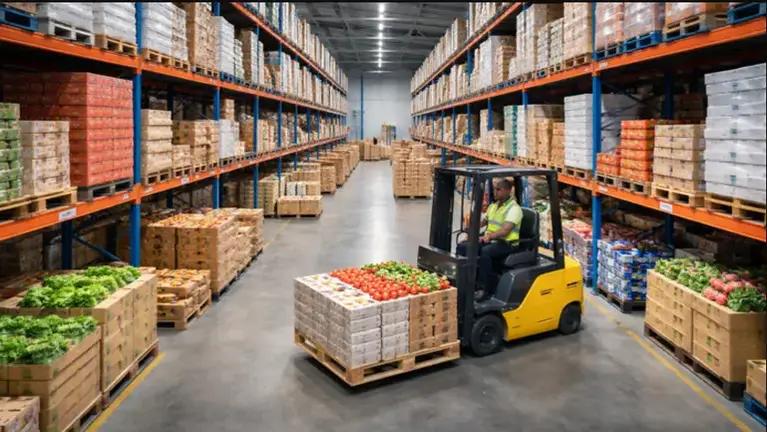
When most people think about the food industry, they usually picture a few places: the farm where food is produced, the restaurant where it is served, or the grocery store where they shop.
The reality is that there is an entire industry operating between all of those points that most consumers never think about.
Food distribution sits in the middle of the supply chain, connecting thousands of manufacturers, farmers, processors, and suppliers with thousands of restaurants, hospitals, schools, hotels, and foodservice operators. Without distributors, much of the modern food industry simply would not function.
The Invisible Link
Imagine a local restaurant trying to purchase products directly from every company it needs.
One supplier for chicken.
Another for beef.
Another for seafood.
Several more for produce, dairy products, paper goods, cleaning supplies, beverages, and frozen foods.
The restaurant would spend countless hours managing vendors, scheduling deliveries, and processing invoices. Add that on top of staff call-outs, guest complaints, and unexpected maintenance issues, and it quickly becomes overwhelming.
Instead, distributors consolidate those products into a single delivery network. A restaurant can receive hundreds of items from dozens of manufacturers through one supplier relationship.
That efficiency saves operators labor, money, and most importantly—time.
More Than Just Delivering Food
Many people assume food distributors simply move boxes from one building to another.
In reality, distribution is a highly complex business involving purchasing, forecasting, inventory management, logistics, warehousing, transportation, food safety, technology, and customer support. From the time an order is placed until it reaches the customer, a product may pass through multiple departments and team members before arriving at its final destination.
Every day, distributors must accurately predict demand across thousands of products while ensuring those products arrive at the right place, at the right temperature, and at the right time.
A delay in transportation, a weather event, a crop shortage, or a disruption at a manufacturing plant can impact product availability across entire markets.
The systems required to manage that complexity are fascinating.
How Distribution Impacts Restaurant Profitability
Distribution affects far more than whether a restaurant receives its order.
It directly impacts profitability.
When food costs rise, menu prices often soon follow.
When certain products become scarce, operators may need to adjust recipes, modify menus, or find alternative products. Throughout history, supply chain challenges have forced businesses to innovate and adapt.
When supply chains become more efficient, restaurants can often maintain better pricing and consistency.
Many operators spend significant time analyzing food costs, labor costs, and guest traffic. In reality, the quality of their distribution partnerships can influence all three.
Reliable deliveries, consistent product quality, and competitive pricing can make a meaningful difference to a restaurant’s bottom line.
Why I Find It Fascinating
I grew up on a dairy farm in Southwest Virginia, where I learned how much work goes into producing food long before it reaches a customer.
Later, I spent years working in restaurant management and saw firsthand the challenges operators face every day. Food costs, labor shortages, inventory management, customer expectations, and operational issues all have a direct impact on a restaurant’s success.
Eventually, my career led me into food distribution, where I discovered the industry that connects those two worlds.
The more I learned, the more fascinated I became.
Food distribution combines logistics, economics, sales, operations, technology, and relationship-building into a business that affects nearly every meal served outside the home.
Most people never see it.
Yet every day, thousands of drivers, warehouse workers, buyers, planners, sales professionals, and operators work together to keep food moving across the country.
Distributor Dispatch was created to explore that world.
My goal is to learn more about the industry, share insights along the way, and highlight the people and businesses that help keep foodservice running.
Because while food distribution may be invisible to most consumers, it plays a critical role in every meal that reaches the table.


Leave a Reply